About Bidaya Physiotherapy & Home Rehabilitation
A specialized clinical team delivering hospital-grade in-home physical rehabilitation across the Eastern Province, grounded in rigorous diagnostic assessment, clinical ethics, and caregiver partnership.
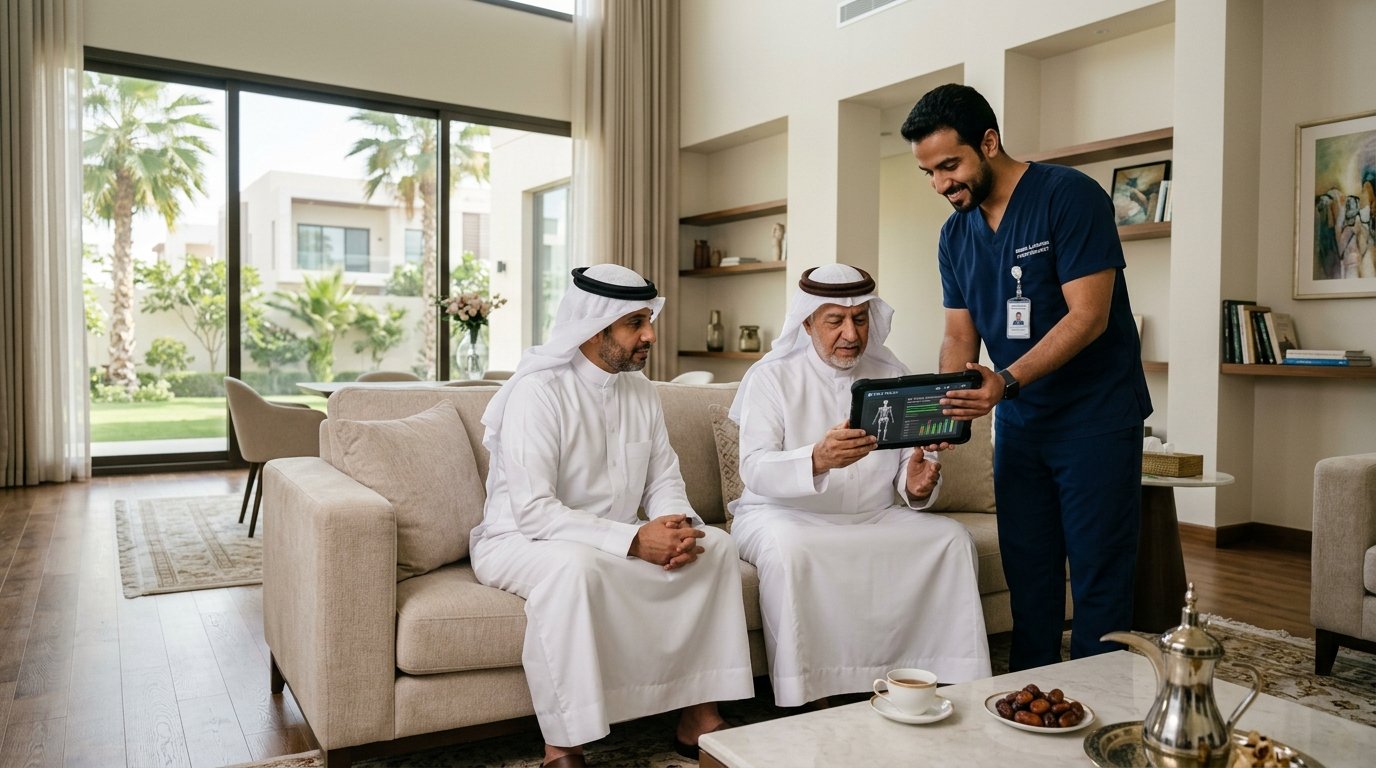
Comprehensive In-Home Clinical Evaluation (60-75 Mins)
Detailed functional & neuro examination, home safety audit, and custom protocol with portable equipment — no upfront package commitments.
Flexible appointments 7 days a week (8 AM - 10 PM) • Payment upon visit completion
1,500+ Successful Home Recoveries
Certified Clinical Physiotherapists
Assessment-First Protocol
Thorough physical evaluation before any treatment plan starts
Specialized Male Therapists
Professional licensed therapists visiting your residence
100% In-Home Rehabilitation
No clinic travel friction or waiting room discomfort
Targeted Functional Goals
Focused on daily stairs, walking endurance, and independence
Bidaya In-Home Physiotherapy & Medical Rehabilitation was established to address an essential clinical need in Saudi Arabia's Eastern Province: providing specialized physical therapy services that refuse to compromise on diagnostic rigor, clinical safety, or ethical transparency simply because care takes place within a private home. Families throughout Dammam, Al Khobar, Dhahran, and adjacent municipalities require rehabilitation services that unite professional clinical excellence with complete respect for domestic privacy and cultural values.
Our clinical philosophy asserts that every patient presents a distinctive neuromuscular profile demanding individualized exercise prescription based on exhaustive clinical examination, rather than generic, pre-packaged therapy templates. We evaluate physical impairment not as an isolated symptom, but within the rich context of the patient's daily functional demands, home architecture, family dynamics, and personal autonomy goals.
Our licensed therapists collaborate proactively with referring orthopaedic surgeons, neurologists, and primary care physicians, providing structured clinical documentation throughout each phase of recovery. Our definitive mission is to empower each individual to regain physical independence, mobility confidence, and quality of life in complete safety and human dignity.
Our Core Clinical Mission, Vision, and Values
Evidence-Based Rehabilitation and Absolute Transparency in Patient Care
Bidaya is guided by clear professional principles that govern every clinical encounter:
1. Clinical Safety Precedes All Else: We never compromise patient safety. Baseline vital signs are verified prior to and throughout each therapeutic session, establishing unequivocal boundaries between stable rehabilitation candidates and patients requiring urgent emergency medical escalation.
2. Evidence-Based Practice: Every therapeutic modality, exercise intervention, and manual technique deployed is backed by peer-reviewed clinical research demonstrating clear functional efficacy. We strictly avoid unscientific, commercialized, or unproven fads.
3. Cultural Dignity and Household Privacy: We recognize the privacy and sanctity of the family home. Our qualified male therapists maintain exemplary professional etiquette, cultural sensitivity, and confidentiality tailored to Eastern Province community standards.
4. Honest and Objective Prognostic Guidance: We reject misleading promises of 100% complete restoration or unrealistic healing timelines. We provide transparent, evidence-based prognoses, clearly explaining expected recovery trajectories, potential obstacles, and the necessity of patient compliance with home exercise programs.
Clinical Creed
Physical rehabilitation is a science and an ethical discipline; we measure our true success by our patients' restored ability to independently perform daily life activities.
Clinical Team Selection Criteria and Continuing Professional Development
Licensed Specialists with Hospital-Grade In-Home Rehabilitation Competencies
The quality of clinical care depends directly upon the expertise, character, and diagnostic capabilities of the visiting clinician. Bidaya enforces a rigorous credentialing and vetting protocol:
- Academic Credentials & Professional Licensing: All physiotherapists hold accredited university degrees in physical therapy and medical rehabilitation, hold active professional licenses, and possess a minimum of five years of prior clinical experience within accredited hospital rehabilitation departments. - In-Home Rehabilitation Competencies: Candidates undergo specialized evaluation regarding their ability to adapt clinical techniques to residential living spaces, address domestic architectural barriers, and safely manipulate patients in home settings without compromising therapeutic leverage. - Communication and Caregiver Coaching: A master therapist must also be an effective educator. Our clinicians are specifically trained in motivational interviewing, patient empathy, and clear pedagogical techniques for instructing family members and caregivers. - Mandatory Annual Safety Certifications: All visiting staff maintain current Basic Life Support (BLS) credentials and complete annual training in infection control, ergonomics, and emergency routing protocols.
- Active professional healthcare license in physical therapy
- Minimum 5 years of verified clinical hospital experience
- Current Basic Life Support (BLS) and infection control certifications
- Demonstrated competency in residential environmental hazard audits
- Strict adherence to patient privacy and professional ethical guidelines
Infection Control and Equipment Sanitization Protocols
Rigorous Hospital-Grade Hygiene Standards Inside the Domestic Environment
To safeguard vulnerable post-operative and elderly patients, Bidaya adheres to strict hygiene and infection control standards during every home consultation:
1. Clinical Hand Hygiene: Clinicians perform thorough alcohol-based hand sanitization immediately prior to entering the patient room, before physical contact, and following completion of manual techniques in accordance with WHO guidelines. 2. Modality Sanitization: All portable assessment and treatment tools—including digital goniometers, sensory probes, electrical stimulators, and resistance equipment—are thoroughly disinfected with medical-grade antimicrobial wipes before and after every patient session. 3. Single-Use and Disposable Supplies: Electrode pads, protective examination covers, and disposable barriers are strictly dedicated to individual patients or disposed of immediately after use. 4. Daily Clinician Health Screenings: Therapists exhibiting any signs of respiratory infection, fever, or transmissible illness are immediately excluded from field visits, safeguarding our patients' households against cross-contamination.
Hygiene Protocol
Equipment sanitization is conducted visibly in the presence of the family prior to treatment to ensure complete reassurance regarding medical hygiene standards.
Outcome-Based Measurement and Re-Assessment Framework
Tracking Functional Mobility with Validated Clinical Scales and Quantitative Metrics
Bidaya embraces a rigorous outcome-driven care model. Rather than relying upon subjective impressions, we systematically track functional progress using validated clinical scales:
- Baseline Assessment Metrics: Recorded during the initial evaluation, establishing baseline joint angles in degrees, pain severity on the Numeric Pain Rating Scale (NPRS 0-10), manual muscle grades (Oxford Scale 0-5), and mobility benchmarks via the Timed Up and Go (TUG) test. - Serial Progress Evaluations: After every cycle of 6 treatment sessions, the clinician repeats standardized tests to quantitatively evaluate improvements in walking velocity, standing tolerance, pain reduction, and activities of daily living (ADL) execution. - Physician Collaboration: We welcome communication with the referring orthopaedic surgeon or neurologist, providing structured clinical progress summaries outlining milestone attainment and recommendations for subsequent phases.
| Standardized Metric | Clinical Domain Evaluated | Measurement Methodology | Assessment Frequency |
|---|---|---|---|
| Numeric Pain Rating (NPRS) | Pain intensity and sleep interference | Standardized score (0-10) | Start and end of each session |
| Digital Goniometry | Active/Passive joint range of motion | Angular degrees (°) | Sessions 1, 6, and 12 |
| Berg Balance Scale (BBS) | Static & dynamic balance, fall risk | Validated 56-point instrument | Monthly or milestone phase |
| Barthel Index | Functional independence in basic ADLs | Percentage score (0-100%) | Pre- and post-rehab protocol |
Caregiver Training and Empowering the Household Support System
Transforming the Home into a Continuous 24/7 Recovery Environment
While a physical therapy visit typically encompasses 60 minutes, true rehabilitation depends upon the patient's movement behaviors during the remaining 23 hours of the day.
Therefore, our clinicians designate dedicated time during each session to educate family members and domestic helpers on: 1. Safe, ergonomic patient transfer techniques (sit-to-stand, bed mobility, wheelchair transfers) protecting both the patient and caregiver from physical injury. 2. Structured daily independent home exercise prescriptions that maintain muscle activation between formal clinical visits. 3. Domestic architectural adjustments: removing unsecured throw rugs, installing bathroom grab bars, adjusting bed heights, and optimizing lighting in hallways. 4. Recognizing early signs of physiological fatigue, requiring immediate rest and recovery.
Interdisciplinary Clinical Governance and Structured Physician Reporting
A Professional Bridge Connecting Home Rehabilitation with Hospital Specialist Oversight
At Bidaya, we do not operate in isolation from the broader healthcare system. Rather, we function as a trusted clinical extension of the referring physician's operative care across hospital centers in the Eastern Province. Following our comprehensive initial assessment, our team generates a formal clinical baseline report documenting functional metrics and proposed milestones.
For patients recovering from complex orthopaedic interventions—such as total joint arthroplasty, internal fracture fixation, or spinal decompression—our therapists strictly adhere to the operating surgeon's prescribed weight-bearing protocols, motion precautions, and contraindication profiles.
Upon completing each structured rehabilitation block (typically 6 or 12 sessions), we formulate an objective progress summary containing comparative goniometric, strength, and functional ambulation data. This structured documentation empowers the attending surgeon or neurologist to evaluate real-world functional recovery during follow-up outpatient visits.
Comprehensive Residential Architectural Auditing and Fall Hazard Mitigation
Adapting Domestic Living Spaces to Foster Movement Safety and Patient Autonomy
The domestic architecture of a home exerts a profound influence on rehabilitation velocity and fall vulnerability. Contemporary villas and apartments across Dammam and Al Khobar feature unique layouts—varying threshold elevations, smooth polished marble or tile flooring, split-level living rooms, and private multi-story staircases—that demand tailored environmental adaptation.
During early home visits, our physiotherapists conduct an environmental audit evaluating key environmental risk factors: - Flooring friction assessment and mitigation: Recommending removal of loose decorative throw rugs and installation of non-slip adhesive runners along high-traffic nocturnal routes. - Seating and bed elevation ergonomics: Ensuring mattresses and primary lounge seating maintain hip-above-knee alignment (roughly 45-50 cm from floor level) to minimize excessive joint shear during sit-to-stand transitions for joint replacement and geriatric patients. - Lighting and transition clearance: Verifying adequate night-time pathway illumination from bedroom to bathroom and eliminating obstructive trailing electrical cables. - Bathroom safety engineering: Providing precise specifications for grab bar placement adjacent to toilets and within shower recesses to maximize transfer stability.
Frequently Asked Questions about In-Home Physiotherapy
We deliver one-on-one, hospital-grade clinical rehabilitation directly to your residence, adapting exercises specifically to your home's architectural demands while sparing you the physical fatigue and logistical friction of clinic transit.
Related Clinical & Regional Pathways
Contact & Home Visit Scheduling→
We are dedicated to helping you restore mobility and physical wellness within your home
Comprehensive Home Physiotherapy→
Delivering individualized
Privacy Policy & Patient Data Protection→
Dedicated to absolute clinical confidentiality
In-Home Knee Osteoarthritis Physiotherapy in Al Khobar→
Evidence-based clinical rehabilitation delivered directly to your doorstep across Corniche
In-Home Post-Total Knee Replacement Rehabilitation in Al Khobar→
Evidence-based clinical rehabilitation delivered directly to your doorstep across Al Hizam Al Thahabi
In-Home Rotator Cuff & Shoulder Rehabilitation in Al Khobar→
Evidence-based clinical rehabilitation delivered directly to your doorstep across Al Hizam Al Akhdar
In-Home MSK & Spine Physiotherapy in Dhahran→
Evidence-based clinical rehabilitation delivered directly to your doorstep across South Doha
In-Home Knee & Post-Operative Rehabilitation in Dhahran→
Evidence-based clinical rehabilitation delivered directly to your doorstep across Al Doha