Advanced In-Home Stroke Rehabilitation & Neurological Recovery
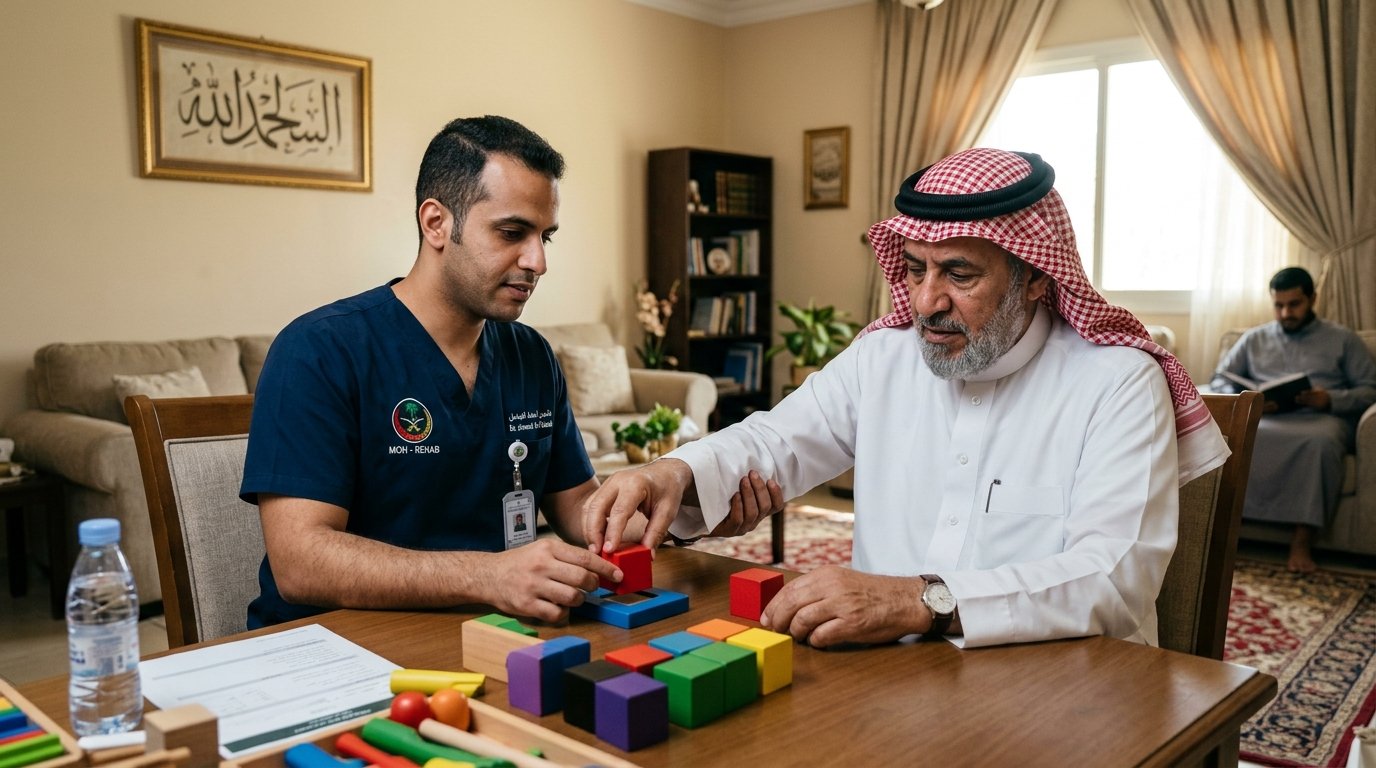
Evidence-based neurological rehabilitation engineered to stimulate corticomotor neuroplasticity, overcome post-stroke hemiplegia, and restore ambulatory independence within your home across Dammam, Khobar, and Eastern Province.
Comprehensive In-Home Clinical Evaluation (60-75 Mins)
Detailed functional & neuro examination, home safety audit, and custom protocol with portable equipment — no upfront package commitments.
Flexible appointments 7 days a week (8 AM - 10 PM) • Payment upon visit completion
1,500+ Successful Home Recoveries
Certified Clinical Physiotherapists
Assessment-First Protocol
Thorough physical evaluation before any treatment plan starts
Specialized Male Therapists
Professional licensed therapists visiting your residence
100% In-Home Rehabilitation
No clinic travel friction or waiting room discomfort
Targeted Functional Goals
Focused on daily stairs, walking endurance, and independence
Emergency Medical Red-Flags & Home Care Boundaries
Emergency Notice: If you observe sudden new facial drooping, slurred speech, or acute arm weakness, immediately dial 997; every minute is vital to save brain tissue.
A cerebrovascular accident (CVA), clinically recognized as a stroke, is a transformative medical event that abruptly disrupts the life of the patient and their entire family. Whether provoked by cerebral arterial ischemia or intracranial hemorrhage, the resultant neuronal necrosis within primary motor, sensory, and speech centers frequently culminates in acute hemiplegia (complete paralysis of one side of the body) or hemiparesis (profound unilateral motor weakness), accompanied by spasticity, balance loss, and sensory-motor neglect.
At Bidaya In-Home Physiotherapy & Medical Rehabilitation, we deliver a specialized in-home neurological rehabilitation service engineered around the transformative biological principle of corticomotor neuroplasticity. Clinical neuroscience demonstrates that the human central nervous system retains the remarkable capacity to re-wire undamaged collateral neuronal circuits, establishing alternative corticomotor pathways to execute lost functions. However, capitalizing on neuroplasticity demands timely, intensive, and high-frequency task-specific training anchored within the patient's actual domestic environment.
Transporting a hemiplegic, bed-bound patient to outpatient rehabilitation centers imposes severe physiological exhaustion, transfers risks, and emotional stress that deplete their finite physical reserve before therapy even begins. Our licensed physical therapy specialists eliminate these logistical obstacles by arriving directly at your private residence across Dammam, Al Khobar, Dhahran, and Qatif. We integrate the Bobath Concept (Neuro-Developmental Treatment - NDT), the Motor Relearning Programme, Neuromuscular Electrical Stimulation (NMES), and assistive device training, while comprehensively coaching domestic caregivers to establish continuous 24-hour therapeutic stimulation.
Neuroplasticity Mechanisms and the Six Brunnstrom Stages of Motor Recovery
A Phased Continuum Guiding Patients from Flaccidity to Fractionated Voluntary Control
Neurological recovery following stroke follows a predictable biological sequence managed by Bidaya's clinical team: - Harnessing Corticomotor Neuroplasticity: Driving synaptogenesis and axonal sprouting across undamaged perilesional cerebral tissue through repetitive, salient, high-intensity task-oriented movement drills. - Brunnstrom's Six Stages of Hemiplegic Motor Recovery: * Stage 1: Flaccidity: Total absence of voluntary movement and deep tendon reflexes; therapy emphasizes gentle passive range of motion, positioning to prevent joint contractures, and bed-sore prevention. * Stage 2: Emergence of Spasticity: Hyperreflexia appears and primitive basic flexor or extensor muscle synergies begin to emerge involuntarily. * Stage 3: Peak Spasticity: Marked hypertonicity; voluntary movement is present but strictly locked within mass synergy patterns (e.g., arm flexion with shoulder abduction). * Stage 4: Declining Spasticity: Spastic tone begins to dissipate; patient executes isolated voluntary movements breaking away from rigid synergistic patterns. * Stage 5: Fractionated Movement Synergies: Independence from mass movement synergies advances; isolated finger movements and complex joint sequencing emerge. * Stage 6: Individual Joint Coordination: Spasticity completely disappears; coordination and speed approach normal physiological parameters.
Comprehensive Standardized Neurological Assessment Protocols
Quantitative Baseline Metrics Documenting Tone, Sensory Integration, and Balance
Our physical therapist administers validated neurological instruments during the initial in-home intake: - Modified Ashworth Scale (MAS): Quantifying the velocity-dependent resistance of hypertonic flexor muscles in the upper extremity and extensor muscles in the lower extremity on a validated 0-to-4 scale. - Fugl-Meyer Motor Assessment (FMA): The international benchmark evaluating motor function, sensory acuity, joint pain, and passive range of motion across both paretic limbs. - Berg Balance Scale (BBS): Assessing static postural stability, unsupported sitting balance, weight-shifting, and 360-degree turns to quantify domestic fall risk. - Barthel Index (BI): Objectively documenting the patient's level of functional autonomy in essential Activities of Daily Living (ADLs) such as transfers, bathing, dressing, and toilet mobility.
Upper Extremity Motor Recovery and Shoulder Subluxation Management
Restoring Reach-to-Grasp Mechanics While Shielding the Vulnerable Paretic Shoulder Complex
Upper extremity rehabilitation requires meticulous biomechanical handling to prevent chronic neuropathic complications: - Preventing Inferior Glenohumeral Subluxation: During early flaccidity, the weight of the paralyzed arm distracts the humeral head from the glenoid fossa. We prescribe customized dynamic shoulder supports, coach family members never to traction the paretic arm during transfers, and stimulate rotator cuff tone via NMES. - Modified Constraint-Induced Movement Therapy (mCIMT): Constraining the unaffected hand for structured daily intervals, compelling the brain to recruit paretic upper limb motor pathways and reversing learned non-use. - Functional Reach-to-Grasp Retraining: Task-specific drills practicing grasping household objects (cups, utensils), opening spastic finger flexors, and utilizing dynamic functional resting splints.
Lower Extremity Retraining, Pelvic Alignment, and Foot Drop Management
Re-Educating Gait Symmetry and Eliminating Compensatory Circumduction
Our therapist restores safe, energy-efficient household ambulation: - Weight-Bearing Retraining on the Paretic Limb: Overcoming psychological reluctance to load the affected leg; utilizing parallel coaching to encourage lateral pelvic weight-shift and quadriceps co-activation. - Correcting Genu Recurvatum (Knee Hyperextension): Retraining eccentric hamstring and quadriceps control during early stance phase, preventing violent backward knee buckling that permanently injures posterior joint capsules and promotes ankle plantarflexion contracture. - Managing Foot Drop and Ankle-Foot Orthosis (AFO) Prescription: Utilizing neuromuscular electrical stimulation on the deep peroneal nerve to stimulate the tibialis anterior, complemented by fitting lightweight carbon-fiber or thermoplastic AFOs to prevent toe drag during swing phase and eliminate tripping over carpets. - Dynamic Balance and Cadence Retraining: Utilizing auditory metronome pacing and visual floor markers in home hallways to normalize step length and eliminate asymmetric hesitations.
Bed Mobility, Postural Transfers, and Caregiver Ergonomic Coaching
Empowering Patients to Roll, Bridge, and Transition from Bed to Chair Independently
Domestic independence begins with foundational bed mobility skills and safe domestic transfers: - Segmental Rolling Mechanics: Teaching the patient to clasp hands bilaterally (symmetrical upper extremity positioning) and rotate the trunk, facilitating safe rolling onto both sides for nocturnal repositioning without crushing or pulling the hemiplegic shoulder joint. - Pelvic Bridging Retraining: Conditioning the gluteus maximus and lumbar extensors to lift the pelvis in supine, facilitating clothing changes, bedpan placement, catheter management, and sit-to-stand transitions. - Sit-to-Stand Transitional Mechanics: Retraining anterior trunk tilt (bringing the nose over the toes) and symmetrical bilateral foot loading to rise from armchairs and wheelchairs without caregivers lifting the patient's full dead weight. - Commode and Automobile Transfers: Practicing pivot transfers toward the sound side first, establishing the unaffected limb as a reliable pivot axis while protecting the paretic foot from twisting.
Caregiver Training, Positioning Protocols, and Complication Prevention
Transforming the Household Environment into a Supportive 24-Hour Recovery Setting
Long-term neurological progress depends heavily on continuous caregiver support within Saudi homes across the Eastern Province: - Therapeutic Bed Positioning: Educating live-in domestic aides and family members on placing supportive pillows beneath the paretic arm to keep it protracted and elevated with fingers extended, and along the lateral thigh to eliminate external rotation contractures (equinovarus deformity). - Decubitus Ulcer Prevention: Establishing a strict 2-hour repositioning schedule, inspecting vulnerable bony prominences (sacrum, greater trochanters, and heels) daily, and implementing alternating-pressure medical air mattresses. - Safe Transfer Mechanics: Coaching family members in utilizing wide-stance body mechanics, bending at hips and knees, and using padded transfer gait belts, protecting caregiver backs from severe occupational strain. - Psychological Reassurance and Combating Depression: Advising family members to celebrate functional milestones, encouraging patient self-initiation, and eliminating overly protective passive dependency.
Clinical Red Flags and Emergent Neurological Warning Signs
Immediate Diagnostic Protocols for Recurrent Stroke, DVT, and Acute Complications
Our physical therapy team maintains rigorous monitoring for life-threatening acute medical emergencies: - Recurrent Stroke Warning Signs (BE-FAST Protocol): * Balance: Sudden onset of unsteadiness, acute loss of balance, or severe coordination collapse. * Eyes: Sudden loss of vision in one or both eyes, visual blurring, or persistent diplopia. * Face: Sudden asymmetrical facial drooping or uneven smile. * Arm: Sudden emergence of new weakness, numbness, or motor paralysis in a previously unaffected limb. * Speech: Acute slurring, receptive aphasia, or inability to articulate or comprehend spoken language. * Time: Every single minute is vital; immediately contact the Saudi Red Crescent Authority at 997 to transport the patient to an acute stroke thrombectomy unit. - Severe Deep Vein Thrombosis (DVT): Acute unilateral calf swelling, localized erythema, and calf tenderness upon dorsiflexion. - Aspiration Pneumonia: Sudden fever spikes, productive cough with purulent sputum, and respiratory distress requiring immediate medical evaluation.
Frequently Asked Questions about In-Home Physiotherapy
The first 3 to 6 months following a stroke represent the golden window of rapid neuroplastic adaptation, where brain reorganization is most active. However, structured intensive physical therapy continues to yield meaningful functional gains years after the initial event.
Related Clinical & Regional Pathways
Post-Discharge In-Home Stroke Physical Therapy Assessment→
Advanced in-home physical therapy restoring ambulation
In-Home Stroke Physiotherapy & Neurological Care in Qatif→
Advanced in-home physical therapy restoring ambulation
Stroke Hemiplegia Motor Recovery & Brunnstrom Synergy Decoupling→
Advanced in-home physical therapy restoring ambulation
Post-Stroke Upper Extremity & Arm Motor Rehabilitation→
Advanced in-home physical therapy restoring ambulation
In-Home Stroke Hand Function, Finger Dexterity & Grasp Retraining→
Advanced in-home physical therapy restoring ambulation
Post-Stroke Gait Retraining, Stance Stability & Walking Symmetry→
Advanced in-home physical therapy restoring ambulation
Stroke Foot Drop Rehabilitation & Neuro-Orthotic Gait Retraining→
Advanced in-home physical therapy restoring ambulation
Post-Stroke Postural Control, Midline Orientation & Balance Rehabilitation→
Advanced in-home physical therapy restoring ambulation