Comprehensive In-Home Physiotherapy Services Directory
An integrated clinical care system delivering evidence-based physical therapy disciplines directly to your residence across Dammam, Khobar, and Eastern Province, supervised by licensed specialists.
Comprehensive In-Home Clinical Evaluation (60-75 Mins)
Detailed functional & neuro examination, home safety audit, and custom protocol with portable equipment — no upfront package commitments.
Flexible appointments 7 days a week (8 AM - 10 PM) • Payment upon visit completion
1,500+ Successful Home Recoveries
Certified Clinical Physiotherapists
Assessment-First Protocol
Thorough physical evaluation before any treatment plan starts
Specialized Male Therapists
Professional licensed therapists visiting your residence
100% In-Home Rehabilitation
No clinic travel friction or waiting room discomfort
Targeted Functional Goals
Focused on daily stairs, walking endurance, and independence
Emergency Medical Red-Flags & Home Care Boundaries
Emergency Notice: In-home physical therapy is indicated for stable functional recovery. For acute chest pain, sudden dyspnea, or acute neurological deficits, immediately dial 997.
Bidaya In-Home Physiotherapy & Medical Rehabilitation provides an extensive portfolio of clinical disciplines specifically engineered to address the functional needs of diverse patient populations within their residences across the Eastern Province. We operate on the principle that delivering healthcare inside the private home must never compromise diagnostic rigor, technological capability, or therapeutic intensity compared to top hospital rehabilitation centers. To that end, our clinicians deploy hospital-grade portable modalities to ensure uncompromising clinical care in an environment of complete domestic comfort.
Our service pathways span the primary pillars of modern physical therapy: targeted orthopaedic and spinal manual therapy; early post-operative protocols following total joint arthroplasty and fracture fixation; intensive neuro-rehabilitation for stroke and neurodegenerative conditions; specialized geriatric mobility and fall prevention programs; and progressive athletic load-reconditioning.
Every specialty track is governed by validated, evidence-based clinical protocols. Therapy commences with a comprehensive baseline intake evaluating musculoskeletal, neuromuscular, and functional limitations, establishing concrete, objective recovery milestones that are systematically monitored alongside the patient, family, and referring physician.
Five Dedicated Clinical Rehabilitation Tracks at Bidaya
Specialized Physical Therapy Protocols Across All Phases of Recovery
Our clinical home service is structured around five specialized rehabilitation tracks led by licensed clinicians with extensive hospital backgrounds:
1. Musculoskeletal & Orthopaedic Physiotherapy: Targeting mechanical spinal disorders (cervical and lumbar disc herniations, sciatica), degenerative osteoarthritis of the knee and hip, adhesive capsulitis (frozen shoulder), and chronic myofascial pain syndromes. Clinicians employ advanced manual joint mobilizations, soft-tissue myofascial release, and kinetic-chain corrective exercises to restore physiological movement.
2. Post-Surgical Orthopaedic Rehabilitation: Systematic progressive protocols for patients following total knee arthroplasty (TKR), total hip replacement (THA), fracture open reduction internal fixation (ORIF), and rotator cuff or ACL repairs. Objectives focus on surgical edema resolution, scar tissue remodeling, restoring functional joint angles, and achieving unassisted ambulation.
3. Advanced Neurological Rehabilitation: Intensive, long-term neuroplastic retraining for individuals recovering from ischemic/hemorrhagic stroke, spinal cord lesions, multiple sclerosis (MS), and Parkinson's disease. We utilize task-oriented movement strategies, sensory-cueing ambulation, and spasticity modulation to optimize functional autonomy.
4. Geriatric Mobility & Fall Prevention: Specialized interventions for older adults countering age-related sarcopenia, balance deterioration, and postural instability. We incorporate validated balance scales, lower-extremity strengthening, and residential environmental modifications to minimize catastrophic fall risks.
5. Sports Injury & Functional Athletic Conditioning: Targeted reconditioning for recreational and competitive athletes recovering from ligamentous sprains, tendonopathies, and muscle strains, ensuring progressive tissue loading before full return to sports.
Clinical Analysis: In-Home Physiotherapy vs. Outpatient Clinics
Why Contextual Home Rehabilitation Produces Superior Functional Outcomes
When deciding between traditional outpatient clinic visits and specialized in-home rehabilitation, patients and families must consider essential functional distinctions:
| Clinical Parameter | Bidaya In-Home Physiotherapy | Traditional Outpatient Clinics |
|---|---|---|
| Clinician Attention | 100% dedicated one-on-one focus for the entire duration of the session | Therapists frequently manage multiple concurrent patients in shared gymnasiums |
| Transit Fatigue & Pain | Zero transit friction; care occurs in familiar, relaxed domestic comfort | Physical exhaustion from vehicular travel, traffic congestion, and waiting rooms |
| Environmental Specificity | Therapy tailored to the patient's actual bed, seating, and domestic stairs | Standardized clinic equipment that often does not replicate residential barriers |
| Caregiver Education | Direct, hands-on training for family members and domestic helpers on transfer safety | Minimal caregiver involvement due to clinic space constraints and rapid patient turnover |
| Protocol Adherence | Significantly higher attendance rates with zero cancellations due to transportation | Higher appointment abandonment rates provoked by pain flare-ups during clinic travel |
Portable Technology and Equipment Deployed to Your Home
Deploying Advanced Diagnostic and Treatment Modalities to the Living Room
Our visiting clinicians arrive with comprehensive, specialized clinical mobile gear:
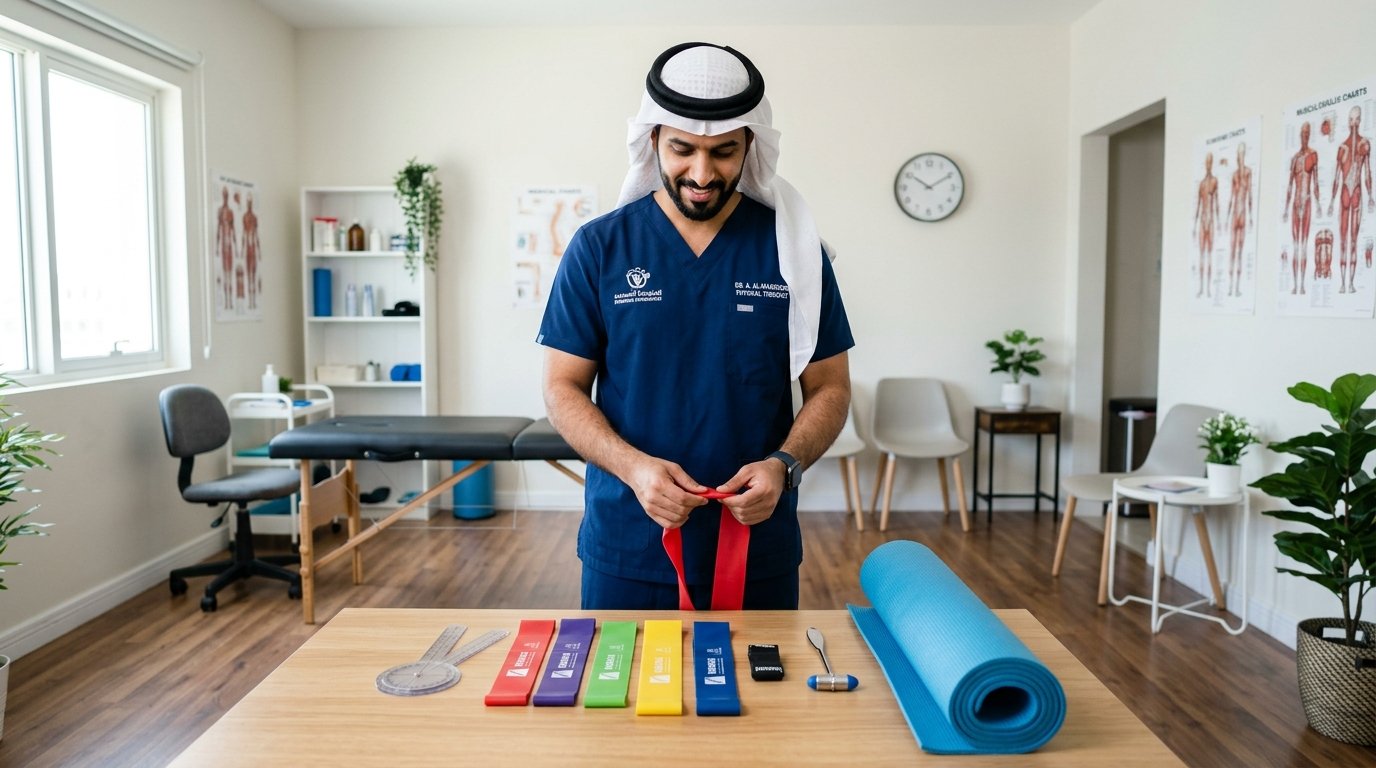
- Neuromuscular and Pain Electrotherapy (TENS / NMES Units): Providing acute pain gating and targeted neuromuscular activation for paretic or post-surgical muscle groups. - Digital Goniometric and Inclinometric Tools: Ensuring precise, objective range-of-motion angular measurements to document serial joint improvements. - Instrument-Assisted Soft Tissue Mobilization (IASTM) Instruments: Mobilizing dense fascial restrictions, scar tissue, and chronic tendon contractures. - Proprioceptive and Dynamic Balance Equipment: Utilizing textured sensory balance pads, stability domes, and agility tools to retrain vestibular and neuromuscular equilibrium. - Calibrated Progressive Resistance Modalities: Applying graded clinical elastic bands, weight cuffs, and manual mobilization belts to facilitate safe strengthening.
Continuous Digital Support and In-Home Exercise Monitoring
Sustaining Functional Gains and Preventing Relapse Between Clinical Visits
Our clinical responsibility does not conclude when the therapist steps outside your doorway. We maintain structured digital follow-up systems supporting patients throughout the week: - Illustrated Home Exercise Manuals: Patients receive clear, photographic step-by-step guides detailing their specific stage-appropriate exercises, repetitions, and rest cycles. - Direct WhatsApp Clinical Inquiries: Caregivers can communicate brief questions regarding exercise tolerance or symptom changes, receiving timely clinician advice. - Weekly Clinical Check-Ins: Our care coordination team conducts regular status calls to review home program compliance, screen for unexpected discomfort, and confirm upcoming visit arrangements.
Clinical Eligibility: Who Benefits Most from Home Physiotherapy?
Careful Intake Screening Ensuring Patients Receive Appropriate Care
In-home physical therapy serves as the premier clinical choice for: 1. Geriatric patients experiencing mobility limitations or severe transit fatigue. 2. Orthopaedic post-surgical patients during the critical first 6 weeks following hospital discharge. 3. Neurological survivors requiring repetitive, task-specific motor relearning within their daily living space. 4. Individuals experiencing severe acute spinal or radicular pain where sitting in an automobile provokes intense symptom spikes. 5. Busy professionals and family leaders requiring maximum scheduling flexibility and complete household privacy.
Conversely, unstable medical patients requiring continuous cardiopulmonary telemetry, immediate surgical revision, or active intravenous intensive care are redirected to acute hospital facilities.
Objective Measurement Framework and Clinical Progress Tracking
Transparent, Data-Driven Rehabilitation Benchmarking Milestone Gains
Across every clinical service, Bidaya enforces standardized outcome tracking: - Baseline Clinical Audit (Session 1): Establishing baseline pain scores (NPRS), joint range of motion (degrees), manual muscle strength (Oxford 0-5), and mobility timings (TUG test). - Serial Interim Review (Session 6): Repeating standardized metrics to measure functional percentage improvement, recalibrating load parameters and exercise progressions. - Discharge and Home Maintenance Portfolio: Providing patients with structured, illustrated independent exercise regimens upon milestone attainment to prevent long-term regression.
Functional Activities of Daily Living (ADL) and Prayer Ergonomics Training
Customizing Rehabilitation to Domestic Prayer Postures and Automobile Transfers
The ultimate measure of successful rehabilitation at Bidaya is the patient's restored capacity to perform meaningful daily tasks, religious obligations, and family roles without debilitating pain or excessive dependence on caregivers. In Saudi households across the Eastern Province, performing ground prayer postures (Sujood, Ruku) and navigating family spaces represent central functional recovery benchmarks.
Our physical therapists systematically retrain prayer mechanics through progressive movement simulation. We begin by conditioning hip, knee, and ankle joint capsules with partial closed-chain loading, progressing toward independent floor transitions utilizing stable external supports during initial phases. For post-surgical joint replacement patients with residual flexion precautions, we optimize seated prayer ergonomics on supportive armchairs, eliminating lumbar strain and avoiding joint hyperflexion.
Furthermore, domestic training addresses vital vehicle transfer mechanics within residential parking garages. Patients are instructed in safe biomechanical techniques: sitting onto the automobile seat first before swinging both lower extremities inward simultaneously, thereby avoiding excessive torsional torque across surgical joints and protecting lumbar disc rings.
Non-Pharmacological Pain Management and Physical Modalities at Home
Modulating Acute and Chronic Discomfort via Physiological Neuro-Sensory Mechanisms
Many rehabilitation candidates in the Eastern Province struggle with persistent discomfort that disrupts sleep architecture and functional mobility, often leading to over-reliance on pharmacological analgesics and non-steroidal anti-inflammatory drugs (NSAIDs).
Bidaya implements targeted, non-pharmacological pain modulation modalities grounded in the neuro-sensory Gate Control Theory and endogenous opioid pathways: 1. Transcutaneous Electrical Nerve Stimulation (TENS): Delivering calibrated high-frequency and low-frequency electrical impulses that selectively block nociceptive signal transmission along A-delta and C-nerve fibers to the dorsal horn of the spinal cord. 2. Controlled Thermotherapy and Cryotherapy Protocols: Deploying medical-grade cold compression wraps to resolve surgical hyperemia and intra-articular edema, followed by moist thermotherapy wraps to decrease viscoelastic muscle stiffness prior to mobilization. 3. Neuromuscular Myofascial Trigger Point Deactivation: Applying localized ischemic compression and gentle transverse friction to release hyperirritable muscular nodules and restore local tissue perfusion.
Clinical Safety Boundaries and Emergency Protocol Execution
Unwavering Priority on Patient Well-Being and Immediate Hospital Escalation
We maintain strict clinical boundaries between non-acute rehabilitation and medical emergencies. Should any patient present during a session with chest pressure, severe dyspnea, acute neurological asymmetry, or signs of pulmonary embolism, the clinician immediately halts treatment, initiates basic safety management, and directs family members to call the Saudi Red Crescent Authority at 997 or transfer to the nearest hospital emergency department.
Frequently Asked Questions about In-Home Physiotherapy
Our clinical intake coordinator reviews your medical history, recent surgeries, and functional complaints during your initial inquiry, matching you with the appropriate physical therapy specialist.
Related Clinical & Regional Pathways
Specialized Treated Clinical Conditions→
A comprehensive medical guide outlining the musculoskeletal disorders
Specialized Physiotherapy Eastern Province→
Comprehensive clinical rehabilitation delivered directly to your residence across Dammam
Specialized Service Locations Coverage→
A responsive clinical mobile network connecting residences across the Eastern Province with licensed physical ...
Specialized Orthopedic Physiotherapy→
Evidence-based clinical rehabilitation delivered directly to your residence across Dammam
Specialized Back & Spine Physiotherapy→
Evidence-based clinical rehabilitation delivered directly to your residence across Dammam
Specialized Knee Rehabilitation Service→
Evidence-based clinical rehabilitation delivered directly to your residence across Dammam
Specialized Shoulder Rehabilitation Service→
Evidence-based clinical rehabilitation delivered directly to your residence across Dammam
Specialized Hip Rehabilitation Service→
Evidence-based clinical rehabilitation delivered directly to your residence across Dammam
In-Home Manual Lymphatic Drainage & Edema Rehabilitation Hub→
Regional clinical authority guide on lymphatic and edema rehabilitation across Eastern Province
Manual Lymphatic Drainage at Home (MLD)→
Specialized clinical Vodder MLD techniques delivered directly to your home in Eastern Province